
Discover How Virtual Models of Human Health Could Transform Future Diagnostics
Imagine a future in which doctors could do more than examine a blood test, scan an image, or review a patient's medical history. What if they could also explore a continuously updated virtual model of that person's biology—one that helps researchers investigate how health might change over time, how disease could develop, and how different interventions might affect the outcome?
This is the idea behind medical digital twins: computational models designed to represent aspects of an individual’s health and, potentially, simulate how those aspects may evolve. By combining biomedical data, mathematical modelling, and artificial intelligence (AI), researchers are exploring ways to move healthcare from isolated measurements toward more individualized and predictive approaches.
Read the research: Medical Digital Twins: Enabling Precision Medicine and Medical Artificial Intelligence
1. What Is a Medical Digital Twin?
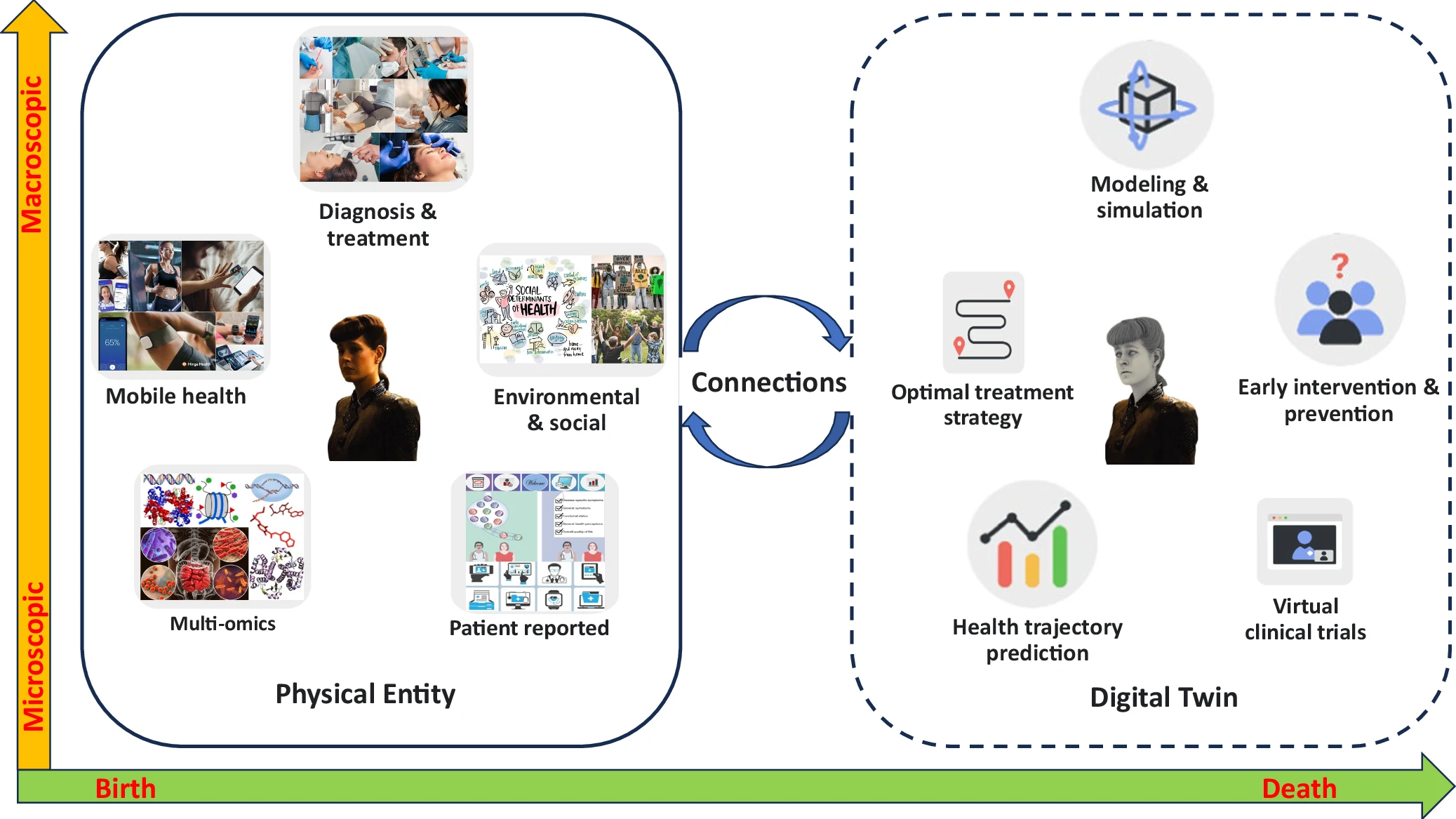
A digital twin originally refers to a virtual representation of a real-world object or system that can be updated with data from its physical counterpart. In healthcare, the concept is being adapted to represent selected aspects of a person's biology, physiology, disease, or treatment response.
Unlike a conventional medical record, which primarily stores observations and events, a digital twin aims to use data and computational models to explore relationships and possible future states. Depending on its design, it might represent a specific organ, a disease process, or several interconnected aspects of an individual's health. Not every model described as a digital twin has the same capabilities, and the field is still developing shared definitions and standards.
Read the research: Medical Digital Twins: Enabling Precision Medicine and Medical Artificial Intelligence
2. What Data Could Build a Virtual Model of Human Health?
A useful medical digital twin would need more than a single laboratory result. Human biology is complex, and the information available from one test captures only part of that complexity. Researchers are therefore investigating how different sources of data could be integrated to build more informative, individualized models.
Potential inputs include:
Laboratory test results: biomarkers, blood chemistry, blood counts, hormone measurements, and other clinical indicators.
Genomic and molecular data: genetic variants and, where appropriate, information from transcriptomics, proteomics, or metabolomics.
Medical imaging: information about structures and changes in organs or tissues.
Longitudinal clinical records: diagnoses, medications, treatment history, and changes in health over time.
Wearable and sensor data: selected measurements such as heart rate, activity, sleep, or glucose levels, depending on the device and clinical context.
Environmental and behavioural information: factors that may influence an individual's health trajectory.
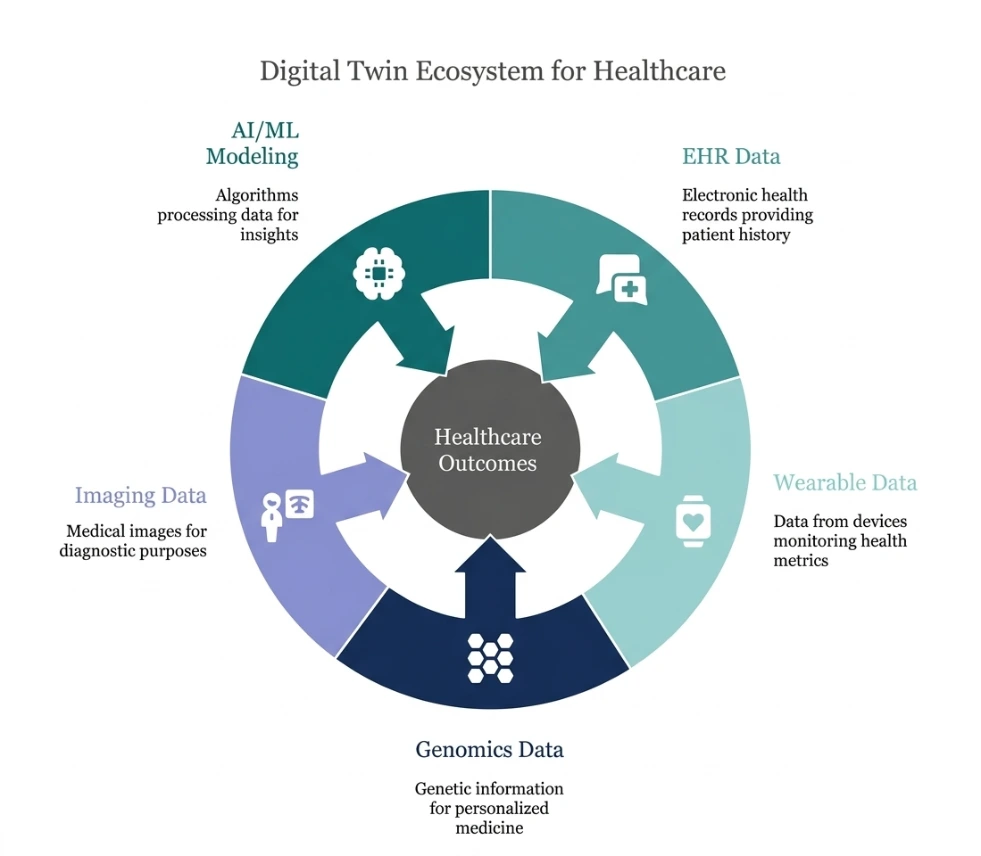
The challenge is not simply collecting more data. Different sources use different formats, have different levels of reliability, and may describe biological processes at very different scales. A model must combine relevant information without treating every measurement as equally accurate or clinically meaningful.
Read the research: Multi-scale Digital Twins for Personalized Medicine
3. Could Digital Twins Detect Disease Before Symptoms Appear?
One of the most compelling possibilities is earlier detection. Many diseases develop through gradual biological changes that may begin before symptoms become noticeable. A single test can provide a valuable snapshot, but repeated measurements may reveal patterns that are difficult to recognize from isolated results.
In a future diagnostic workflow, a digital twin could potentially combine laboratory trends, molecular measurements, clinical history, and other relevant data to estimate how an individual's health may change. Researchers could investigate whether these models identify meaningful patterns earlier than existing approaches or help determine when additional testing might be useful.
However, the ability to predict disease reliably before it develops has not been established for medical digital twins as a general technology. Performance would depend on the disease, the quality and timing of the data, the model's design, and evidence from appropriate clinical studies. An experimental prediction should not be confused with a validated diagnostic result.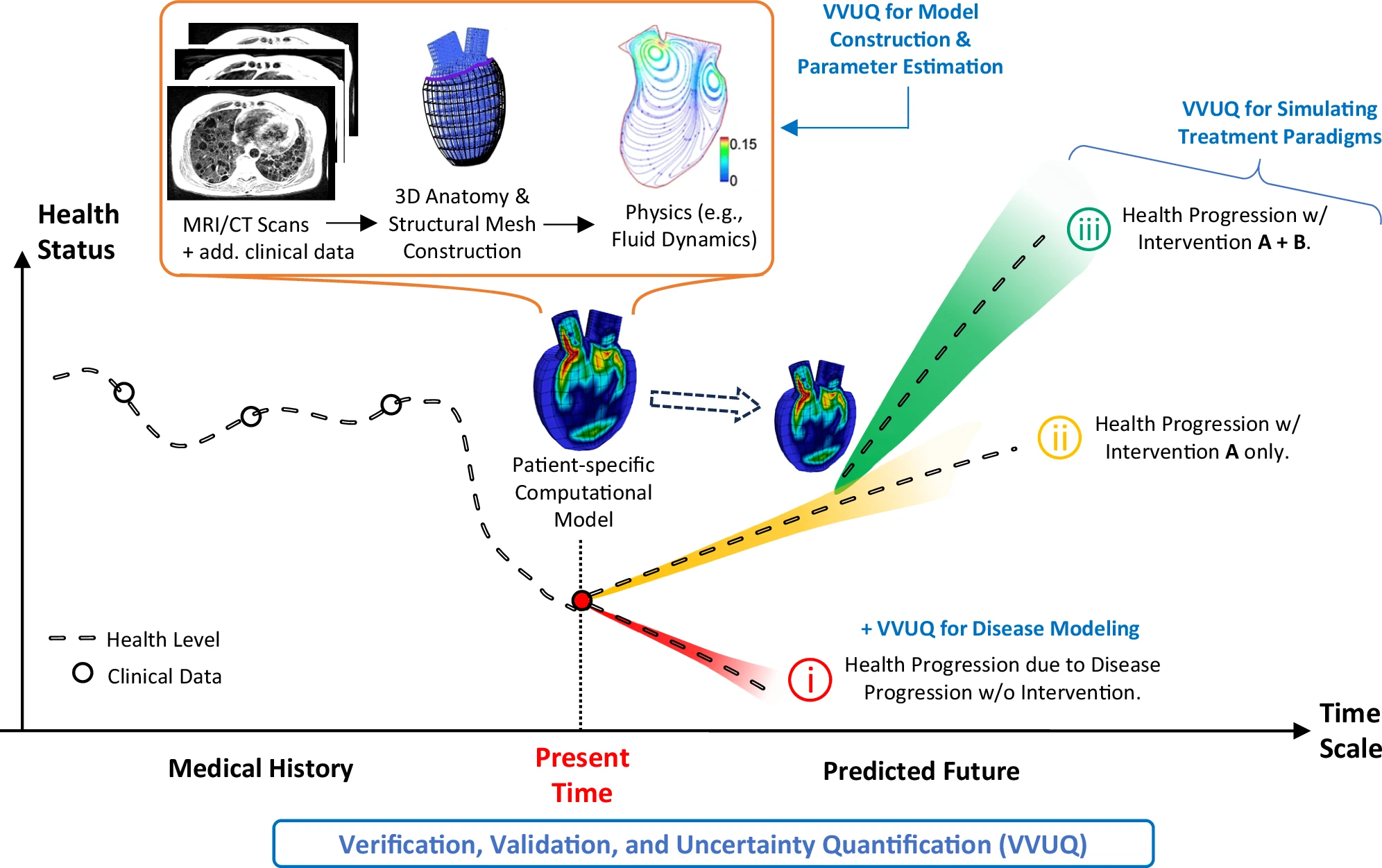
Read the research: Advancing Health Care With Digital Twins: Meta-Review of Applications and Implementation Challenges
4. From One Test to a Continuously Updated Diagnostic Picture
Traditional diagnostics often focus on a particular question: Is a biomarker above a reference range? Is a pathogen detectable? Does an image show an abnormality? These tests remain essential, but they do not always describe how a person's condition is changing across time.
A more advanced digital-twin approach could connect multiple observations into a longitudinal model. For example, a series of laboratory measurements might be analysed alongside medication changes, symptoms, and other relevant clinical information. The model could then explore whether the combined pattern is consistent with different possible health trajectories.
The important distinction is that a digital twin would not replace laboratory testing. Rather, validated systems could potentially help interpret results in context, identify patterns that warrant further investigation, and support decisions about what information to collect next. Whether this improves clinical outcomes must be demonstrated for each intended use.
Read the research: The Status Quo and Future Prospects of Digital Twins for Healthcare
5. Could Researchers Test Treatment Scenarios Virtually?
Digital twins may also help researchers explore questions that are difficult, expensive, or impractical to investigate directly in a patient. Depending on the model, simulations could examine how a biological system might respond under different assumptions or compare potential treatment strategies before they are tested in clinical settings.
For example, researchers studying a complex disease might investigate how changes in selected biological parameters influence predicted outcomes. In oncology, digital-twin research is exploring how individualized models could contribute to understanding tumour behaviour and treatment response. In chronic disease research, models may be used to examine how changing physiological conditions or interventions could influence longer-term trajectories.
These simulations are not substitutes for clinical trials or medical judgement. Their results depend on the assumptions, data, and mechanisms represented in the model. A virtual scenario can generate a hypothesis or help prioritize an experiment, but it does not prove that the same outcome will occur in a real person.

Read the research: Medical Digital Twins: Enabling Precision Medicine and Medical Artificial Intelligence
6. The Role of Artificial Intelligence
AI could help digital twins analyse complex datasets, identify patterns, and integrate information from different sources. Machine-learning models may recognize statistical relationships in large datasets, while mechanistic models use representations of biological or physical processes to describe how a system behaves.
Combining these approaches is an active research direction. A machine-learning model may detect patterns that are difficult to specify in advance, while a mechanistic model can contribute structure and constraints based on scientific understanding. Together, they may offer a more informative representation than either approach alone—but only when the models and their assumptions are appropriate for the intended task.
AI also introduces risks. A model may perform well on the data used to develop it but poorly on data from a different hospital, population, or laboratory. It may learn misleading associations, amplify gaps in the available data, or produce predictions that are difficult to interpret. Independent testing and transparent evaluation are therefore essential before its predictions can support clinical decisions.
Read the research: Multi-scale Digital Twins for Personalized Medicine
7. What Is Preventing Digital Twins From Becoming Routine Diagnostics?
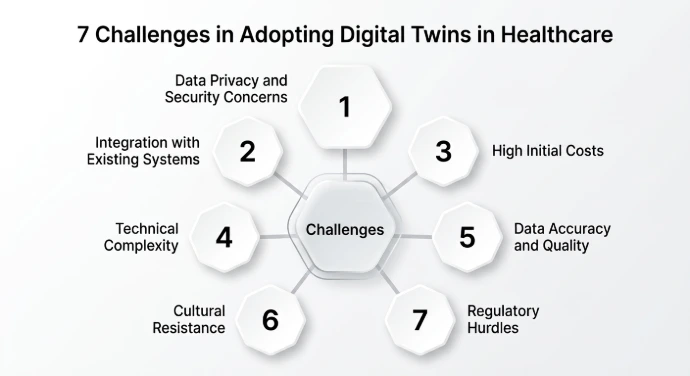
The concept is promising, but building a reliable digital twin of human health is a substantial scientific and technical challenge. Several barriers must be addressed before such systems can be trusted in routine clinical practice.
Data quality and integration
Measurements from different laboratories, devices, and healthcare systems may not be directly comparable. Missing data, inconsistent formats, measurement errors, and changes in testing methods can distort the model. Reliable integration requires appropriate standards and careful handling of uncertainty.
Biological complexity
Human biology involves interactions among genes, cells, tissues, organs, behaviour, and the environment. A model that represents only a narrow part of this system may miss important influences. Increasing complexity, however, also makes a model more difficult to build, interpret, and validate.
Clinical validation
A model must be tested to establish whether its predictions are accurate, reproducible, and useful for a clearly defined purpose. It should be evaluated on appropriate data beyond its development dataset, and its performance should be assessed in the populations and settings where it is intended to be used. Technical accuracy alone does not prove that a system improves patient care.
Privacy, security, and fairness
A digital twin may rely on highly sensitive information gathered from multiple sources. Responsible development requires safeguards for data access, storage, sharing, and security. Researchers must also examine whether a model performs differently across demographic groups or populations that are underrepresented in its training data.
Clinical workflow and regulation
Even a technically successful model may be difficult to use in practice if it does not fit laboratory workflows, clinical information systems, or the decisions clinicians need to make. Clear accountability, appropriate regulatory oversight, and evidence of clinical benefit are important parts of responsible implementation.
Read the research: Advancing Health Care With Digital Twins: Meta-Review of Applications and Implementation Challenges
8. What Could the Future of Diagnostic Science Look Like?
A future diagnostic system might combine laboratory instruments, molecular testing, medical imaging, wearable sensors, and clinical records with computational models that are updated as new information becomes available. Instead of treating every result as an isolated event, validated models could help researchers and clinicians investigate how different measurements relate to an individual's changing health.
In this scenario, diagnostics could become more longitudinal and personalized. Models might help identify which additional measurements could be informative, compare possible explanations for an emerging pattern, or support research into how disease and treatment response evolve over time.
Achieving this vision will require more than powerful algorithms. It will depend on high-quality data, biologically meaningful models, rigorous validation, privacy protection, and evidence that using these tools leads to better decisions or outcomes. The most useful digital twins may therefore emerge gradually, beginning with specific organs, diseases, or clinical questions rather than attempting to model the entire human body at once.
Recent research into multi-scale digital twins highlights this direction: integrating molecular, cellular, tissue, organ, clinical, behavioural, and environmental information while addressing the technical and ethical challenges of doing so.
Read the research: Multi-scale Digital Twins for Personalized Medicine
Conclusion: From Diagnostic Snapshots to Possible Health Futures
Medical digital twins offer a fascinating vision for the future of diagnostic science. By integrating biomedical data with computational modelling and AI, researchers are exploring whether virtual representations of health could improve our understanding of disease progression, support personalized treatment research, and help interpret changes that unfold over time.
For now, these possibilities should be viewed with scientific caution. Medical digital twins vary widely in scope and maturity, and many applications still require stronger validation before they can guide routine diagnosis or treatment.
The key question is not simply whether we can create a digital model of a patient. It is whether that model can provide reliable, clinically useful information that conventional approaches cannot deliver as effectively. Answering that question could help determine the role digital twins will play in the next generation of precision diagnostics.
Explore more with DiagnostiCore: Discover emerging diagnostic technologies, research innovations, and the scientific evidence shaping the future of laboratory medicine.
Sources and Further Reading
The following peer-reviewed publications are available to read online without a subscription. Check each article's licence before reusing its figures, tables, or other material.
Vallée, A. (2026). “Multi-scale digital twins for personalized medicine.” Frontiers in Digital Health.
Open-access review exploring multi-scale modelling, biomedical data integration, AI, and challenges for personalized medicine.
https://www.frontiersin.org/journals/digital-health/articles/10.3389/fdgth.2026.1753906/full
“Medical digital twins: enabling precision medicine and medical artificial intelligence.” (2025). The Lancet Digital Health.
Discusses the components of medical digital twins, the role of data integration and modelling, and potential applications in areas including oncology and diabetes.
“Advancing Health Care With Digital Twins: Meta-Review of Applications and Implementation Challenges.” (2025). Journal of Medical Internet Research.
Reviews healthcare applications and major implementation barriers, including data quality, ethics, interoperability, and clinical validation.
“The status quo and future prospects of digital twins for healthcare.” (2024). EngMedicine.
Reviews healthcare digital-twin concepts and applications, with discussion of data collection, model construction, ethics, and regulation.
“Digital twins in healthcare: a comprehensive review and future directions.” (2025). Frontiers in Digital Health.
Reviews digital-twin architectures, possible healthcare applications, and issues surrounding validation, privacy, and security.
https://www.frontiersin.org/journals/digital-health/articles/10.3389/fdgth.2025.1633539/full